Read about the book

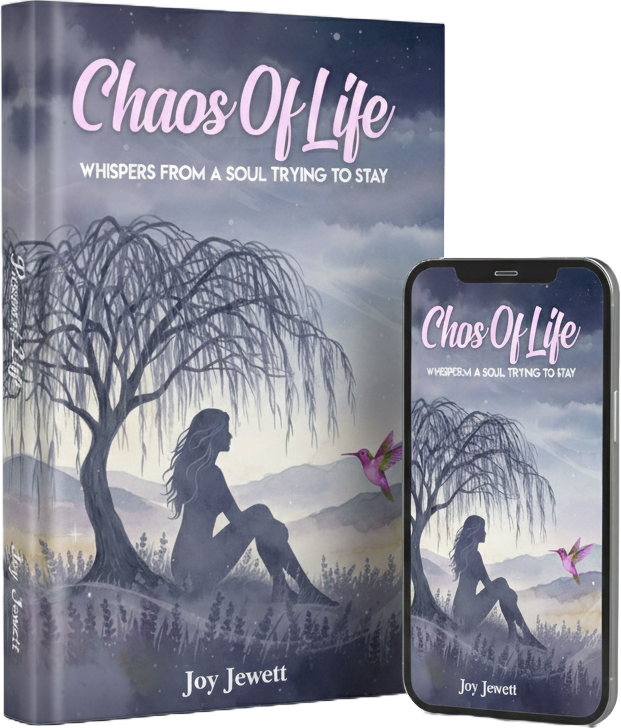
Book cover e-book format

Poetry, Chaos of Life, by Joy Jewett

Sixty days. Over three hundred poems. One woman telling the truth.
Poetry, Chaos of Life is Joy Jewett’s debut collection, and it does not ease you in gently. It begins with a woman who walked runways in her youth, survived cancer twice, lost her heart to Covid, buried a husband of thirty-six years and discovered, afterward, that the life they built together had quietly disappeared along with him. No money. No house. No version of the future she had planned.
What she had was words. God gave her that, she says, and she means it.
The collection moves across love and grief, faith and fury, nature and memory, tenderness and betrayal. There are sonnets and parables, prayers and personal essays, poems addressed to a cardinal outside a winter window and poems addressed to men who stole her photographs on dating sites. There are poems about hummingbirds, about her four sisters, about children playing in a river on a hot afternoon, about what it means to be a woman in her seventies who still wants to be chosen.
Joy Jewett poems about life and love do not keep a comfortable distance from their subject. They arrive at your door having already decided to tell you everything.

The Range of the Collection

There is no single note to Poetry, Chaos of Life. Joy Jewett does not settle into one mood and stay there.
There are love poems in this collection that reach toward something still hoped for, Dancing in Your Arms, Until the Stars Fade Away, A Love That Heaven Sees. There are grief poems that do not announce themselves until you are already inside them. There are prayers, Prayer in Stillness, If I Sat with God, written to a God she addresses directly, without formality, asking what more she is expected to take and asking Him to let her purpose unfold before it is too late.
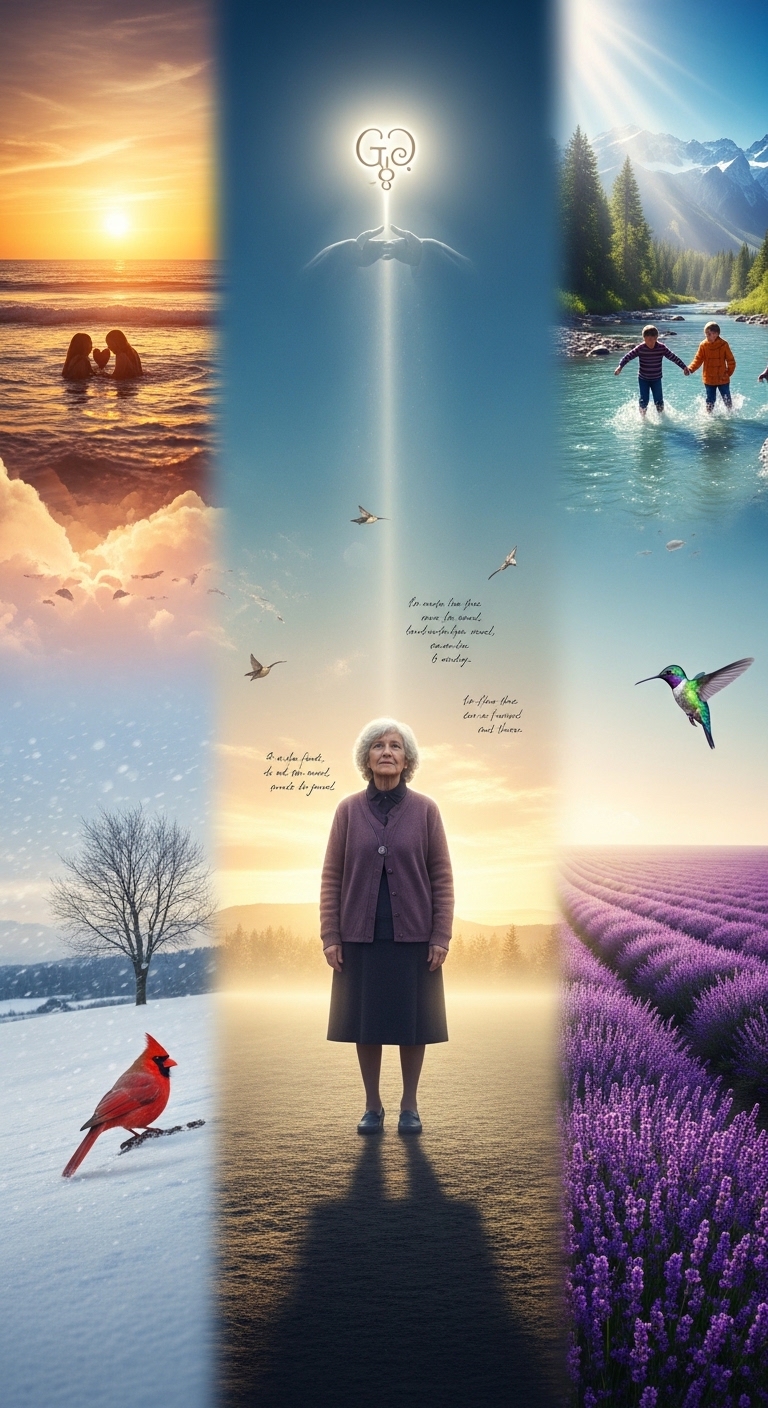
There are poems about nature that carry more peace than anything else in the book, a cardinal fighting the winter wind to find his mate, snow on a hill, a hummingbird in a field of lavender, children chasing fish in a mountain river with their bare hands. There are parables about men who mistake love for distraction and lose it. There are sonnets. There is a poem written in French. There is a piece called The Attack of the Pheasant that is, genuinely, funny.
And underneath all of it, the faith, the love, the fury, the tenderness, runs a single current. A woman asking to be seen clearly, for who she is and everything she brings, not through any lens other than her own.
Joy Jewett poems about life and love are not one thing. They are everything, in the order it arrived.
Whisk 749cc794886a0e990ec48c856b6b7b29dr

The Life Behind the Poems

Poetry written from a comfortable distance reads differently from poetry written from inside a life still being lived. The difference is not always about craft. It is about whether the poet had anything at stake when they wrote it.
Joy Jewett had everything at stake.
The poem Before Our Time Was Through is dedicated to Bill, her husband of thirty-six years. You Died and I’m No Longer Me is addressed to him too, and it describes, in plain language, what it costs a person to lose the one who held them together. Not just the grief of the absence but the collapse of everything that surrounded it. The money gone. The house gone. The woman she had been inside that life, gone too.
In the New Morning Light maps the whole arc, first love at twenty, his death at twenty-five, nine years alone, then Bill, then thirty-six years, then loss again. Cancer twice. Covid taking her heart. And still, at the end of the poem, one question: Where will I be in the new morning light?
She does not answer it. That is the point.
The collection also contains Blackmailer, You Stole My Picture but Not My Life, Just a Guy Hiding on a Dating Site and Scammed by Silence, poems that document, without sentimentality, what it is to be a woman alone in her seventies, looking for connection in a world that has found new ways to exploit exactly that. These poems are not victims’ testimonies. They are indictments, written with precision and no small amount of wit.
Book cover e-book format

Faith, God and the Spiritual Current Running Through the Collection

Faith is not a decorative element in Poetry, Chaos of Life. It is structural. It is the thing Joy Jewett returns to when everything else has given way, and she returns to it not with the polished language of formal devotion but with the directness of someone having a real conversation with God about real things.
Prayer in Stillness opens: God, are You listening to my prayers? Do You see these tears, feel my despair? She is not performing piety. She is asking a genuine question from a genuine place of exhaustion. She asks Him to take the pain, to let her purpose unfold, to guide her dreams into the light, not for fame, but to be a soul who loves and lives for Him.
The Gift of Words From God to Me credits the source directly. The poems exist, she says, because God gave her the gift of language, a spark that dances in ink and air, a bridge from soul to soul laid bare. Without that gift, there is no collection. She writes it knowing this.
If I Sat with God takes the conversation further. A White Witch’s Prayer takes it somewhere else entirely, across spiritual traditions, with the same searching sincerity.
For readers who bring their own faith to what they read, this collection will feel like company. For readers who do not, it will still feel honest, because Joy Jewett is not performing belief. She is living it, messily and completely, on every page.

Whisk 2e05e5dc9b89dc2b4fa4f52e5dfb362cdr

She Wrote It in Sixty Days. It Will Stay with You Considerably Longer

Joy Jewett sat down and wrote everything she had left, the grief, the faith, the love, the fury, the tenderness, the dark nights on the terrace, the prayers she was not sure anyone was hearing, and she put it in a book.
Poetry, Chaos of Life is available now.
Read it because it is honest. Read it because it is fearless. Read it because somewhere in its one hundred and fifty poems, there is a line that will stop you and stay with you in the way that only the true things do.